The Mission
Tics & Techniques is dedicated to educating and empowering others by helping them learn about the different types of tic disorders, their impact on individuals, and the importance of raising awareness. Through advocacy and the arts, we promote understanding, acceptance, and confidence for those navigating life with tic disorders.
About the Founder
Makenzi Jackson
I was diagnosed with a stress-induced tic disorder during my teenage years, an experience that deeply shaped my confidence, self-expression, and understanding of mental health. What began as a personal challenge became a powerful source of purpose. I created Tics & Techniques as my platform as Miss Phenix City’s Teen to bring awareness to tic disorders, reduce stigma, and remind others that they are not alone. I share my story openly and incorporate the arts as a tool for confidence and coping. I advocate for understanding, acceptance, and support for individuals navigating the same challenges I once faced and still understand firsthand.

Coping Techniques
01.
CBIT
CBIT is an evidence-based behavioral therapy designed to help individuals manage tics and Tourette Syndrome by teaching awareness and alternative responses.
CBIT (Comprehensive Behavioral Intervention for Tics) is a structured, non-medication therapy aimed at reducing the frequency, severity, and impact of tics in children, adolescents, and adults. It combines behavioral and cognitive strategies to help individuals recognize their tics and develop new, competing behaviors that prevent the tic from occurring. CBIT is not a cure for tics but helps people gain control and improve daily functioning.
For more information on CBIT visit Tourette Association of America
02.
Breathing Techniques
Breathing techniques can be a helpful, accessible tool for individuals with Tourette Syndrome and other tic disorders—especially when tics are triggered or intensified by stress and anxiety.
When the body is stressed, the nervous system shifts into a heightened “fight-or-flight” state, which can increase the frequency or intensity of tics. Slow, controlled breathing helps calm the nervous system, signaling to the brain that the body is safe and regulated. This sense of calm can reduce stress-related tic flare-ups and make tics feel more manageable.
Breathing techniques can also:
-
Lower anxiety, a common tic trigger
-
Increase body awareness, helping individuals recognize early signs of stress
-
Improve focus and self-regulation, especially in high-pressure situations like school, performances, or social settings
-
Provide a coping strategy, giving individuals a sense of control rather than feeling overwhelmed by their tics
While breathing techniques do not eliminate tic disorders, they can be a powerful supportive tool—helping individuals feel grounded, confident, and better equipped to navigate daily challenges with less stress and more self-compassion.
03.
Movement Techniques
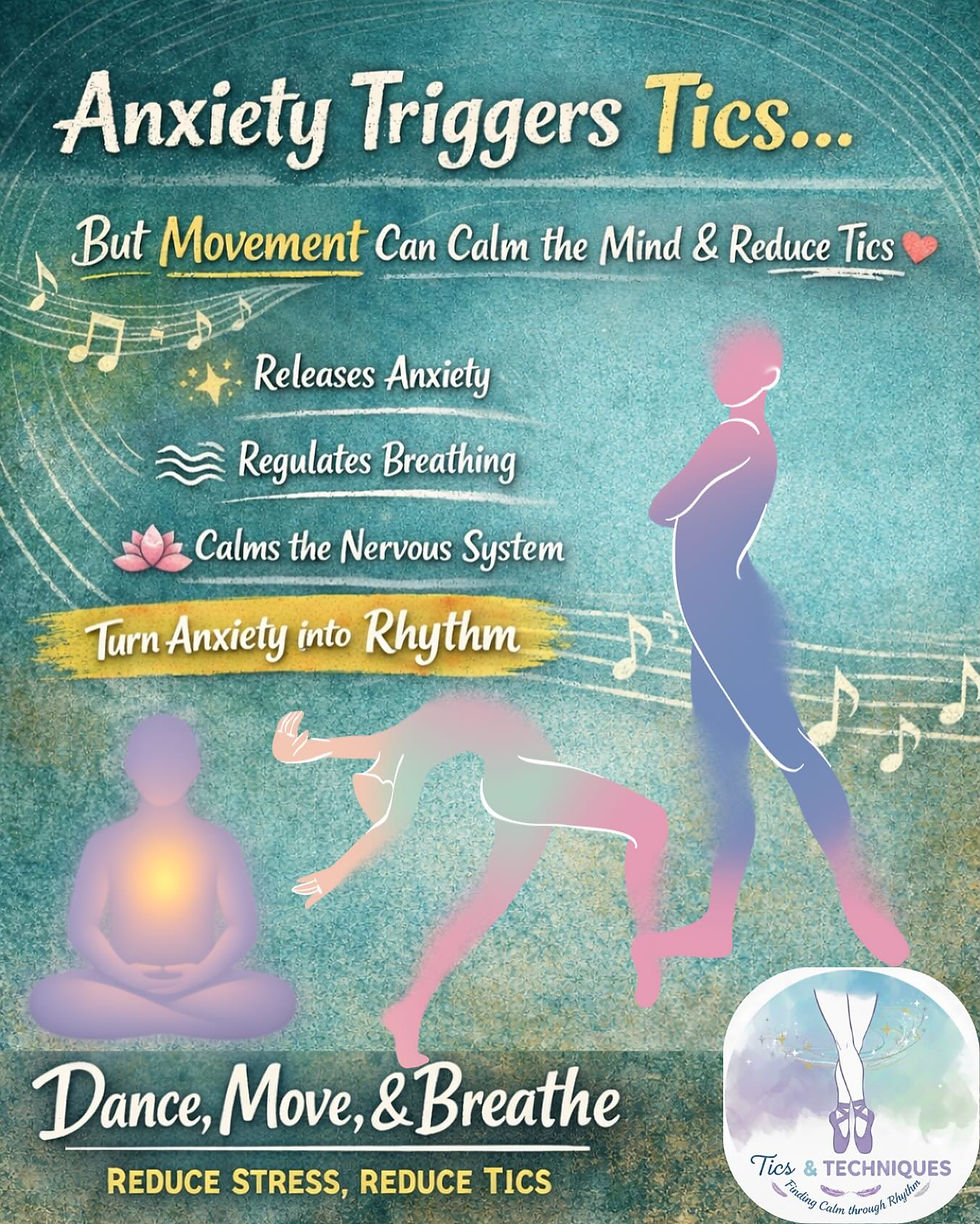
Movement can be a powerful and empowering outlet for individuals with Tourette Syndrome and other tic disorders, offering both physical and emotional benefits.
Many people with tic disorders notice that tics decrease when they are deeply focused or fully engaged in an activity like dance. Dance provides that focus through rhythm, timing, and purposeful movement, allowing the brain to redirect energy in a structured and expressive way. This can lead to temporary tic reduction and a greater sense of control over the body.
Dance can also:
-
Reduce stress and anxiety, two of the most common tic triggers
-
Build body awareness and coordination, helping individuals feel more connected to their movements
-
Boost confidence and self-esteem, especially when self-expression replaces self-consciousness
-
Encourage emotional release, offering a safe space to process feelings without words
-
Create community, helping individuals feel accepted, supported, and understood
While dance is not a cure for Tourette Syndrome or tic disorders, it can be an incredibly effective coping and confidence-building tool. By turning movement into expression rather than limitation, dance empowers individuals to embrace their bodies, celebrate their differences, and move through life with greater freedom and confidence.
Empowering
Tourette Assocation of America
Your support of the Tourette Association of America (TAA) helps ensure individuals and families from our local communities who are impacted by Tourette Syndrome and tic disorders receive education, resources, and compassionate support close to home. Donations directly strengthen programs that promote understanding, access to care, and a stronger community—making a meaningful difference in the lives of those who need it most.